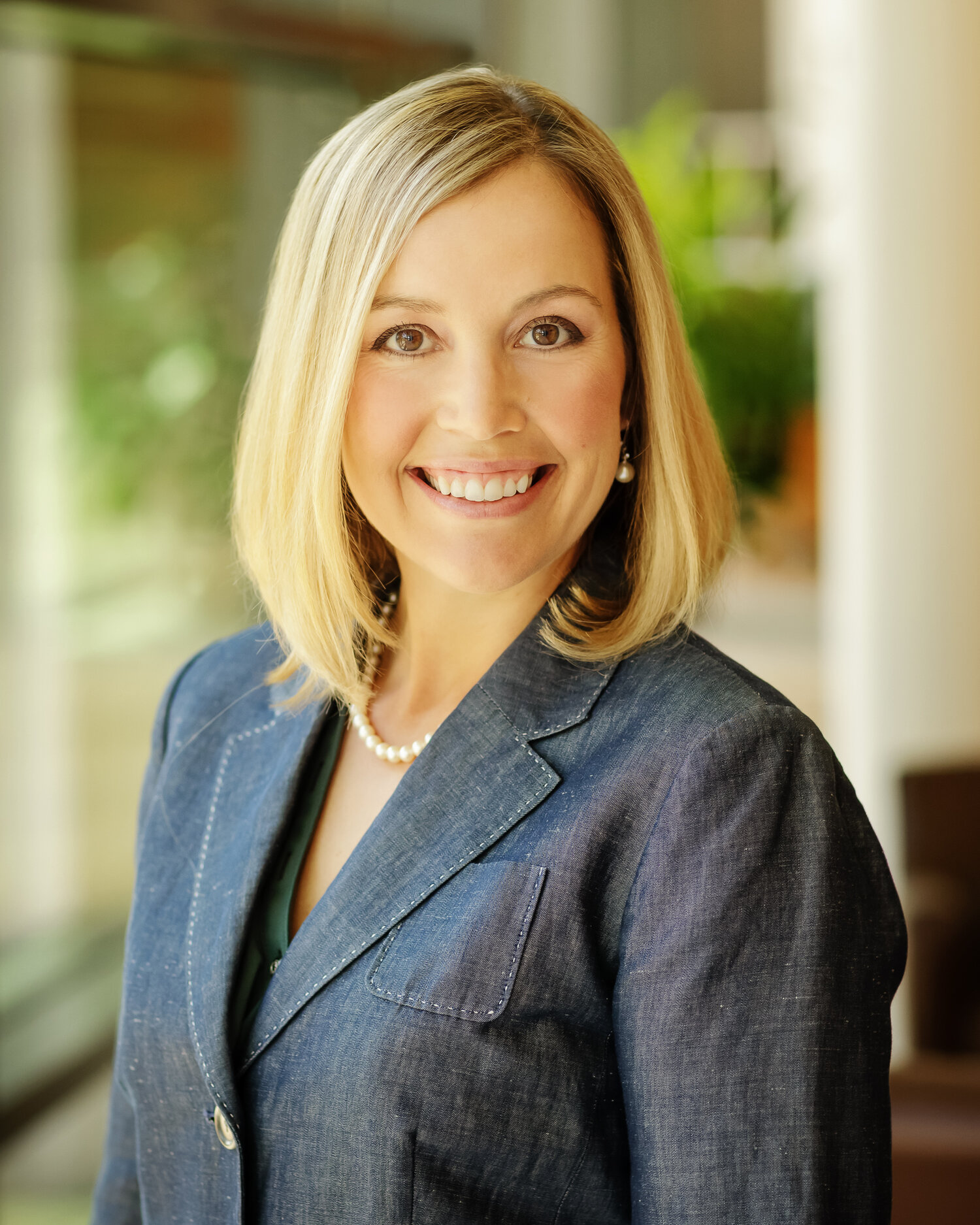
Francesca Chiaromonte


My coordinates: I can be found at the Center for Comparative Genomics and Bioinformatics of the Pennsylvania State University, 505A Wartik Laboratory, University Park, Pennsylvania 16802. My office ph is 814 865 7075, but the best way to reach me is by email, using chiaro at stat dot psu dot edu.  


About me: I was born in Naples, Italy, and grew up in and around Rome. I received a Laurea (cum laude) in Statistic and Economic Sciences from the University of Rome La Sapienza, where I worked with Giovanni Dosi on a thesis titled Processes of Microeconomic Innovation and Macroeconomic Dynamics. After moving to the US, I received a Ph.D. in Statistics from the University of Minnesota (Minneapolis, MN), where I worked with R. Dennis Cook on a thesis titled A Reduction Paradigm for Multivariate Laws. At Penn State, I am an Associate Professor of Statistics (and of Public Health Sciences by courtesy), as well as a core member of the Comparative Genomics and Bioinformatics Center. Other institutions where I work and worked include the Courant Institute and the Department of Biology of New York University, the International Institute for Applied Systems Analysis (Laxenburg, Austria) and the Santa Fe Institute (Santa Fe, New Mexico).


Passing on some wisdom: I taught many graduate and undergraduate courses, often concerning regression methods, bioinformatics, and the statistical analysis of data produced by high-throughput genomic technologies. Here are links to a few of my recent course websites: Applied Regression Analysis, Bioinformatics II, Current Research in Statistical Genomics. My colleagues (including statisticians, computer scientists and biologists) and I maintain a close-knit co-advising network to train and mentor students working at the interfaces between our disciplines. Examples of our recent graduates are Svitlana Tyekucheva (PhD in Statistics, 2008, now a post-doc at Johns Hopkins), James Taylor (PhD in Computer Science, 2006, now a Biology and Math&CS faculty at Emory University), and Shan Yang (PhD in Biochemistry and Molecular Biology, 2004, now a senior bioinformatics scientist at Applied Biosystems).


My work in Statistics: My interests as a statistician cover multivariate analysis and regression (including dimension reduction, supervised and unsupervised classification, non-parametric tools and parametric regression modeling), computational techniques (including re-sampling, perturbation and permutation schemes for the empirical assessment of significance), Markov models (as applied to genomic sequences and alignments), and more recently approaches to the analysis of high-dimensional and under-sampled data (which are very common in genomics applications). In particular, with funding from the NSF, R. Dennis Cook (Statistics, U of MN), Bing Li (Statistics, Penn State) and I pursue research on Sufficient Dimension Reduction, a body of theory and methods for handling high-dimensional regression and classification problems, which is also closely related to graphics and data visualization. Representative publications.


My work in Bioinformatics and Genomics: In the last several years, most of my research has been at the interfaces between statistics, bioinformatics and genomics. This work comprises NIH and NSF funded collaborations with Ross Hardison, Kateryna Makova, Webb Miller, Anton Nekrutenko, Mary Poss and other researchers at the Center for Comparative Genomics and Bioinformatics and the Center for Infectious Disease Dynamics of Penn State, as well as other institutions (e.g. the Center for Biomolecular Science and Engineering of UC Santa Cruz). Starting with our participation in several genome Consortia (e.g. Mouse, Rat, Chicken), we used sequence and alignment data to investigate various aspects of evolution and function. Among others, I have been involved in projects concerning alignment scoring methodology, estimation of the share of the human genome under purifying selection, genome-wide computational prediction of regulatory elements (see ESPERR and RP scores), local variation and co-variation of divergence processes and the determinants of mutagenesis, X chromosome inactivation, etc. Recently, we begun tackling data from ChIP-chip and next generation sequencing technologies; integrating this data with sequence, alignment and transcriptional information helps us in pursuing questions about both evolution and function. Representative publications.


My work in Meteorology: Through an NSF funded collaboration with Jenni Evans (Meteorology, PSU), I also work on the application of dimension reduction, clustering, regression and re-sampling methods to large-scale meteorological data. In particular, we investigate the structure and lifecycle evolution of cyclones with a focus on the process of extra-tropical transition. Representative publications.


(last updated Nov 2008)